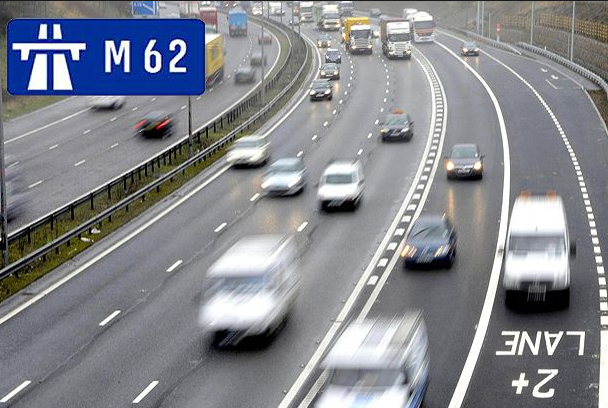

‘Transport modelling – fact, forecast or fiction?’ was the topic of a well-attended meeting of the Transport Planning Society at which I was a panelist. I argued that there was occurring quite a lot of change in travel behaviour as we moved into the twenty-first century – not least the Peak Car phenomenon – which made the task of the modeller more difficult. Modelling of any kind assumes continuity between past and future, that past relationships (estimated as elasticities) will apply in the future, subject to changes in parameters exogenous to the model, such as growth in GDP, population and oil prices. If behaviour is changing, the best approach is to widen the range of forecasts by adopting scenarios which allow the model to explore the impact of a wider range of travel behaviour. An example is the generation by Department for Transport modellers of road traffic forecasts based on five scenarios applied to the National Transport Model.

I also drew attention to the experience of the Actuarial profession, which after the failure of a life assurance company had prompted a government inquiry,  had put in place formal standards for actuarial analysis and a means for professional oversight of compliance. One standard deals with modelling, the language of which is quite general and would be relevant to other kinds of modelling, including transport modelling. So the actuaries’ arrangements show that it would be possible to put in place formal standards for transport modelling. However, for this to happen, there would probably need to be some kind of scandal, as happened to the actuaries.

One kind of scandal involving transport modelling has occurred in Australia, where a number of privately-funded toll roads have experienced usage far below the forecasts made when investors were approached to finance construction. This has resulted in litigation that in at least one case resulted in the transport consultant responsible for traffic forecasts paying out $200m. Were something similar to happen in Britain, I would expect a call to put in place standards for transport modelling.

My fellow panelists had their own concerns and solutions to achieve better transport modelling. My feeling from the meeting as a whole is that there is a needed to  review systematically the current state of the art and to identify ways to improve. I hope the Transport Planning Society might act as a thought-leader, given the centrality of modelling to planning.
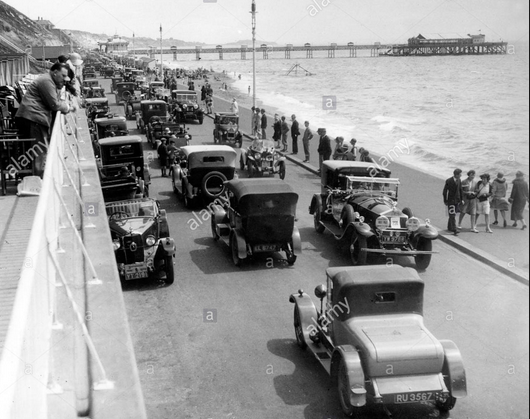
I visited Bournemouth to participate in a day-long seminar on transport arranged by the Council for councillors and officials. My fellow speakers were my UCL colleague, Peter Jones, and Phil Jones, a consultant transport planner. My presentation Metz Bournemouth 14-4-16

We  see that big cities such as London attract people to work, study and live, which results in higher population density and prompts investment in rail-based public transport since growth of mobility  cannot be met by more cars on the road network. But for smaller cities and larger towns like Bournemouth, the route to more sustainable transport is less clear. Cars are popular and responsible for 67% of commuting trips in Bournemouth, substantially higher than the 44% for Brighton, another prosperous south coast resort, perhaps reflecting thre latter’s more youthful demographic profile and better co-operation between the local authority and the bus operators. There may be lessons to be learned from Brighton’s experience.

More generally, my sense is that smaller cities and larger towns need to decide what kind of a place they want to be, and then work towards that aim incrementally, using stick and carrots.  A traditional aim has been to accommodate the car with plenty of cheap parking, thus attracting the trade of visitors. But then the volume of urban traffic lessens the sense of place and attractiveness of the destination. Pushing back the cars, for instance through higher parking charges, may be unpopular in the short term, but may generate a source of revenue that would allow attractive improvements to be made to the urban realm. Fostering bus services and cycling by means of appropriate infrastructure investment is the carrot to balance the stick of parking constraints.

Breaking down the customary distinction between carriageway for vehicles and footway for pedestrians can be helpful in reducing conflicts and accommodating both, as the example of Poynton, Cheshire demonstrates.

In my presentation, I drew attention to evidence that travel in the twenty-first century is turning out to be different from travel in the twentieth, in particular that growing prosperity is no longer necessarily associated with increasing car use. This creates opportunities for policy initiatives in towns like Bournemouth that go with the grain of more sustainable trends.

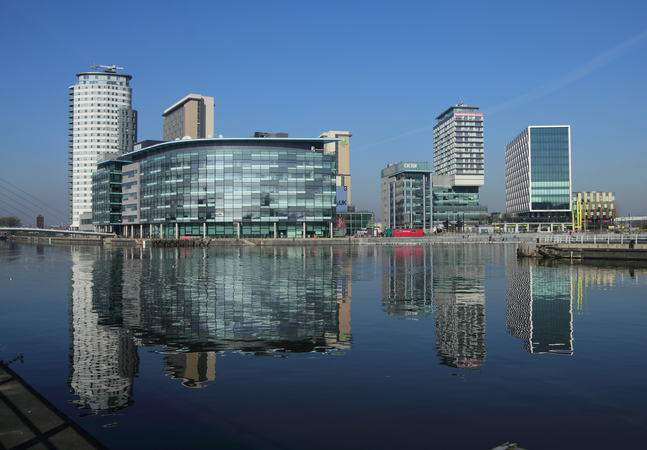
I visited Manchester last week to address the Transport Planning Society (my presentation Metz TPS Manchester 23-3-16 ). I took the opportunity to talk to people at Transport for Greater Manchester and to ride the Metrolink tram to MediaCity, the waterfront development of BBC and ITV studios. It seemed clear that this important development would not have happened in the absence of the tram since other modes of travel would not have provided the assurance of speed and reliability necessary to make such a site readily accessible. The general rule is that to develop urban brownfield land, it is crucial to have rail-based access from the city centre and main station.

The Government recently established a National Infrastructure Commission, an independent body whose purpose is to identify the UK’s strategic infrastructure needs over the next 10 to 30 years and propose solutions to the most pressing infrastructure issues. The Commission’s initial remit from the Government includes transport investment both in the North of England and in London. The Chair is Andrew Adonis and one Commission member is Lord Heseltine, the former deputy prime minister who has long championed the regeneration of Britain’s inner cities through infrastructure investment. Another Commission member is Demis Hassabis, artificial intelligence researcher and head of DeepMind Technologies, a company acquired by Google for a reported £400m. He may be an advocate for twenty-first century digital infrastructure, rather than yet more twentieth-century concrete and tarmac.

The National Infrastructure Commission has the potential to improve decision making by ensuring that sound analysis takes place in advance of decisions. The interesting question is how the Commission will function. Will it be a cheer-leader for those keen to build big civil engineering stuff with other people’s money? Or will it be a critical friend to government departments needing to get best value from constrained budgets?

There are two useful models for how independent bodies can advice government. The Office for Budget Responsibility was created to provide independent and authoritative analysis of the UK’s public finances. The Committee on Climate Change has the task to advise the Government on emissions targets and report to Parliament on progress made in reducing greenhouse gas emissions and preparing for climate change. Both the bodies are seen to be independent and their advice carries weight on that account.

It will be important for the National Infrastructure Commission to look critically at the analytical methodologies current employed by government departments, to ensure these are fit for purpose. This was one aspect of the paper that I recently submitted in response to a call for evidence (Metz NIC sub 4-1-16 pdf). I contrasted the position in London, where a dynamic economy requires continuing transport investment to keep up with economic and population growth, with the North of England, where it is hoped that such investment will stimulate growth, a far from certain outcome.