I was invited recently to speak at a research conference of investment analysts and asset managers concerned with the automotive industry. My presentation summarised my thoughts about the future of the car:

Car use in big cities will decline, as a share of all travel, as exemplified by London. Successful cities attract those wishing to share that success – businesses, people to work, study and live. Population grows, population density increases, which generates economic gains known as agglomeration benefits, with analogous cultural and social benefits. The city authorities recognise that the road system cannot cope with potential demand for car travel and so invest in public transport, particularly rail which provides speedy and reliable travel compared with the car on congested roads.

Beyond city centres, the car will remain popular where there is road space to move and to park. But per capita car use is unlikely to grow in the developed economies.

Income growth no longer drives the growth of average distance travelled. The main determinant of the growth of travel demand is population growth. Corresponding growth of car ownership and use will depend in where the additional inhabitants are housed: more car ownership for greenfield sites, less for urban locations.

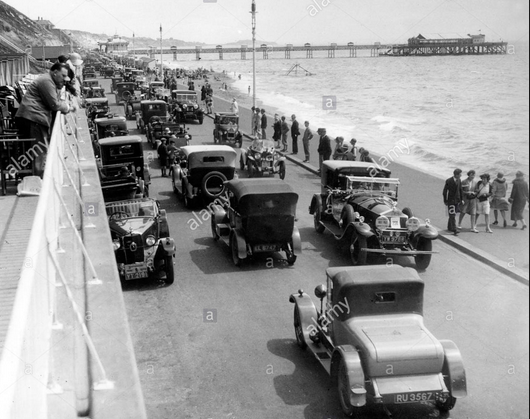
The car has developed incrementally since the original mass-market Model T Ford that hit the road a century ago. Despite enormous improvement and refinement, we still employ nineteen-century-originated mechanical engineering in modern cars. Electric vehicles use twentieth-century-originated electric propulsion and storage, which is being improved and refined to increase market penetration. Only with driverless vehicles do we get to a twenty-first century technology.

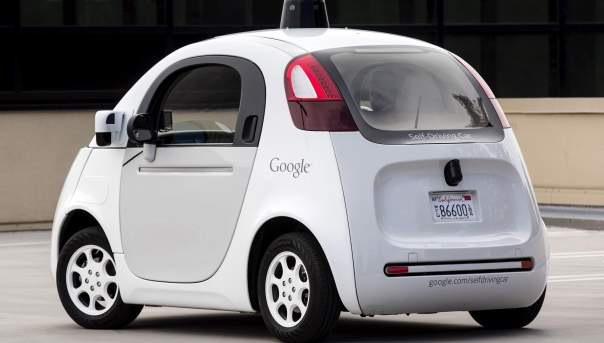
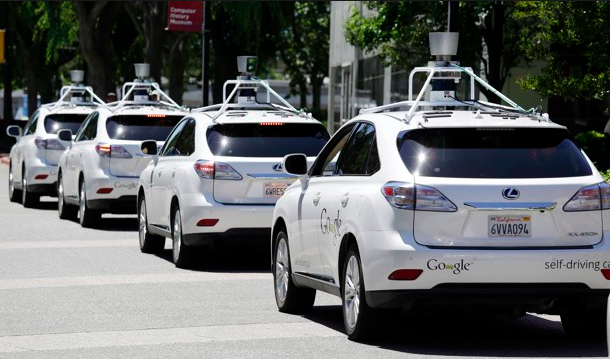
Digital technologies are being adopted incrementally by the motor manufacturers to ease the task of driving – the advanced driver assistance systems. Ultimately, these could permit full hands-off mode. But the manufacturers who market cars based on performance would promote driverless travel only when driving was tedious, as on long motorway trips or in congested urban traffic. In contrast to these evolutionary developments, we have Google’s revolutionary attempt to take a giant leap forward to a car lacking controls for a human driver. This is essentially a taxi with a robot driver. Taxis are useful: we would make more use of them if they were cheaper, as they might be if robots replaced human drivers. But they would not constitute a fundamentally new form of road transport.

More generally, application of the fast developing, disruptive digital technologies to road travel is constrained by the slow-to-evolve nature of the mechanical engineering technologies that still define the car. Nevertheless, there are possibilities for disruptive innovations that would affect car ownership and use:

Mobility-as-a-Services (MaaS) is a concept that would allow us seamless travel via the most appropriate mode, all arranged via a smartphone app (not dissimilar in concept to the traditional travel agent’s offering for long-haul trips). Feasibility of MaaS depends on being able to integrate the availability of the most appropriate mode – whether taxi, train, tram, bike – under different ownerships, with paperless ticketing, including at times of peak demand. This could be challenging, but if successful, would lessen the attractions of the personal car.

While role-out of simple driverless taxis would not be a fundamental innovation for road transport, the addition of shared occupancy to share ownership (‘shared-squared driverless’) would permit the more efficient use of road space. UberPOOL already offers shared trips at lower cost to those heading in the same direction at the same time. Two additional measures would further increase the efficiency of the urban road network: demand managemen that would give priority to shared occupancy vehicles, following the precedents of the High Occupancy Vehicle lanes on US commuter routes and zero charge for taxis in London’s congestion charging zone. Plus an urban road analogue of air traffic control that serves to avoid conflicts between aircraft and smooth flows, which would become possible as vehicle-vehicle and vehicle-infrastructure communications are developed. A shared-squared-driverless scenario with minimal congestion could offer door-to-door travel at time of choice with speeds comparable to urban rail, again lessening the attractions of personal car ownership.

The present state of battery technology constrains electric car sales, hence much effort is being expended to develop better batteries. Batteries based on the current Li-ion electrochemistry are being refined to improve performance, reduce costs and increase market penetration of electric vehicles. But it is possible that a new electrochemistry will be developed with superior performance – energy density, rate of charging, lifetime and cost. Much then depends on who owns this new battery: if a single battery manufacturer wishing to maximise sales, then all auto manufacturers could take advantage; but if an auto manufacturer had teamed with the battery manufacturer in developing the innovative product, that team could have a disruptive advantage.

Assessment

There are an increasing number of uncertainties that will affect the long-term development of the auto industry: changes in travel behaviour, attitudes to driving and personal car ownership, demographic developments, new technologies and new business models. It’s hard to take a view about investment outcomes. Given the greater risks involved in investing, larger returns will be sought. But then the question is what will motorists be willing to pay for driver assistance technologies that add significantly to the cost of cars, particular mass market models. The answer remains to be seen as these technologies percolate down the model price range.


The term ‘strategy’ (adjective ‘ strategic’) is now in common use, for instance the Government’s Road Investment Strategy for the Strategic Road Network. Why don’t we speak of the Motorway and Trunk Road Network, and of the Road Investment Plan, both arguably clearer descriptions?

The concept of strategy was originally derived from military thinking. As explained by Edward Luttwak in his classic book (‘Strategy: the Logic of War and Peace’,1987), what differentiates a strategy from a plan is that the former has to take account of the likely response of the adversary. Building a force of long-range bombers (‘strategic bombers’) elicits countervailing reactions, both anti-aircraft defences and dispersal of important industrial targets.

Where competition is experienced in non-military spheres, strategy is also important. Oil companies selling petrol at retail outlets where the price is very visible find that competition drives down profit margins. The company most distressed needs to raise the pump price, but has to judge the likely response of local competitors – whether they will emulate the price rise or resist it to increase market share.

In contrast, Government-initiated ‘strategies’ tend not to take account of competitive responses. The Government’s five year Road Investment Strategy is really a Plan. The supporting economic analysis and forecasts are too insubstantial to assess the likely behavioural responses – not in this case of adversaries but of users of the Strategic Road Network. I have argued previously that available evidence is consistent with the proposition that additional capacity is exploited by local users, with little if any benefit for the long distance users – which seems paradoxical for a network designated ‘strategic’. However, paradox is a characteristic of strategic thinking. Recall the maxim: if you want peace, prepare for war.

We should certainly think about transport investment strategically. But this requires a deep understanding of the behavioural responses to new infrastructure and services – the subject of a new book of mine to be published later this year.


The Government Office for Science initiated a Foresight project on Future of Cities, which has now concluded after three years of effort. The exercise was relevant to the plans of the Government for devolving powers to city-regions.

Some three dozen reports and essays were commissioned from experts (including my contribution on Peak Car), and a number of workshop meetings held. Some of the authors have contributed to an issue of Prospect magazine.

There are four reports as final outputs of the project. These are high level summaries, of substantial and varied inputs, which are neither concise nor cogent. The problem is the complexity of cities and the difficulty this creates for thinking about their future.

Forecasting and Complexity

The real world is complex, which makes it hard to understand, and which in turn means that forecasting is problematic. Models of particular regions or sectors assume continuity between past and future, relying on historic relationships as a guide to the future, subject to assumed changes in exogenous variables such as GDP and population growth, oil prices, and technological developments. But if the future is different from the past then historic relationships may no longer apply and forecasts cannot be relied upon.

One approach to dealing with such uncertainty is by means of scenarios that allow for new possibilities. While these may help to indicate the range of possible outcomes, they tend to be somewhat arbitrary and so are rarely persuasive.

Another approach is two-pronged, addressing contrasting developments. We attempt to identify: (a) factors which show long-term stability; and (b) points of transition between one set of relationships and a successor set. For travel, a long term constant is average travel time, of about an hour a day. And a point of transition is the end of the twentieth century when the Peak Car phenomenon signalled a change in behaviour, travel demand no longer being driven mainly by growth of incomes but now by population growth.

Assessment

The Future of Cities project has generated much interesting evidence from experts but has been disappointing in that it has not yielded illuminating conclusions. Naturally, at the beginning of such a project, the outcome is uncertain even if hopes are high. In the event, the conclusions are worthy, but bland.


‘Transport modelling – fact, forecast or fiction?’ was the topic of a well-attended meeting of the Transport Planning Society at which I was a panelist. I argued that there was occurring quite a lot of change in travel behaviour as we moved into the twenty-first century – not least the Peak Car phenomenon – which made the task of the modeller more difficult. Modelling of any kind assumes continuity between past and future, that past relationships (estimated as elasticities) will apply in the future, subject to changes in parameters exogenous to the model, such as growth in GDP, population and oil prices. If behaviour is changing, the best approach is to widen the range of forecasts by adopting scenarios which allow the model to explore the impact of a wider range of travel behaviour. An example is the generation by Department for Transport modellers of road traffic forecasts based on five scenarios applied to the National Transport Model.

I also drew attention to the experience of the Actuarial profession, which after the failure of a life assurance company had prompted a government inquiry,  had put in place formal standards for actuarial analysis and a means for professional oversight of compliance. One standard deals with modelling, the language of which is quite general and would be relevant to other kinds of modelling, including transport modelling. So the actuaries’ arrangements show that it would be possible to put in place formal standards for transport modelling. However, for this to happen, there would probably need to be some kind of scandal, as happened to the actuaries.

One kind of scandal involving transport modelling has occurred in Australia, where a number of privately-funded toll roads have experienced usage far below the forecasts made when investors were approached to finance construction. This has resulted in litigation that in at least one case resulted in the transport consultant responsible for traffic forecasts paying out $200m. Were something similar to happen in Britain, I would expect a call to put in place standards for transport modelling.

My fellow panelists had their own concerns and solutions to achieve better transport modelling. My feeling from the meeting as a whole is that there is a needed to  review systematically the current state of the art and to identify ways to improve. I hope the Transport Planning Society might act as a thought-leader, given the centrality of modelling to planning.

I visited Bournemouth to participate in a day-long seminar on transport arranged by the Council for councillors and officials. My fellow speakers were my UCL colleague, Peter Jones, and Phil Jones, a consultant transport planner. My presentation Metz Bournemouth 14-4-16

We  see that big cities such as London attract people to work, study and live, which results in higher population density and prompts investment in rail-based public transport since growth of mobility  cannot be met by more cars on the road network. But for smaller cities and larger towns like Bournemouth, the route to more sustainable transport is less clear. Cars are popular and responsible for 67% of commuting trips in Bournemouth, substantially higher than the 44% for Brighton, another prosperous south coast resort, perhaps reflecting thre latter’s more youthful demographic profile and better co-operation between the local authority and the bus operators. There may be lessons to be learned from Brighton’s experience.

More generally, my sense is that smaller cities and larger towns need to decide what kind of a place they want to be, and then work towards that aim incrementally, using stick and carrots.  A traditional aim has been to accommodate the car with plenty of cheap parking, thus attracting the trade of visitors. But then the volume of urban traffic lessens the sense of place and attractiveness of the destination. Pushing back the cars, for instance through higher parking charges, may be unpopular in the short term, but may generate a source of revenue that would allow attractive improvements to be made to the urban realm. Fostering bus services and cycling by means of appropriate infrastructure investment is the carrot to balance the stick of parking constraints.

Breaking down the customary distinction between carriageway for vehicles and footway for pedestrians can be helpful in reducing conflicts and accommodating both, as the example of Poynton, Cheshire demonstrates.

In my presentation, I drew attention to evidence that travel in the twenty-first century is turning out to be different from travel in the twentieth, in particular that growing prosperity is no longer necessarily associated with increasing car use. This creates opportunities for policy initiatives in towns like Bournemouth that go with the grain of more sustainable trends.

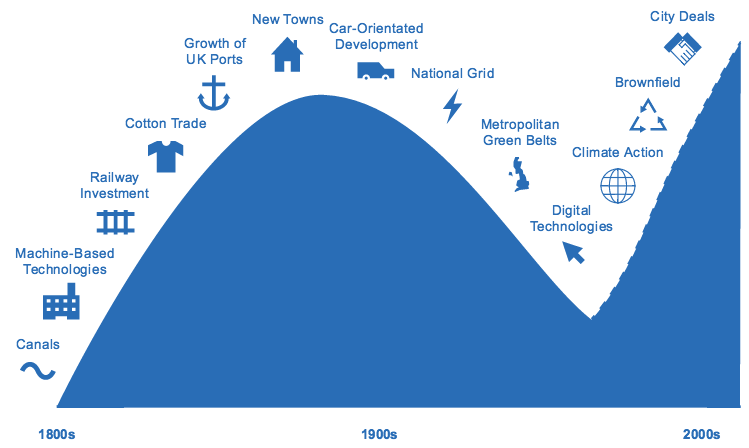
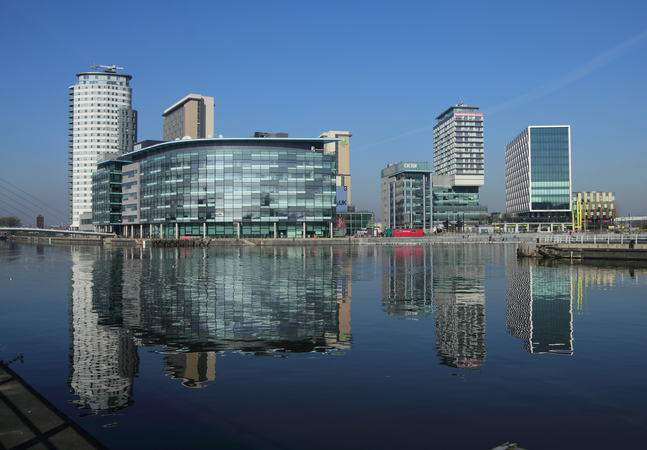
I visited Manchester last week to address the Transport Planning Society (my presentation Metz TPS Manchester 23-3-16 ). I took the opportunity to talk to people at Transport for Greater Manchester and to ride the Metrolink tram to MediaCity, the waterfront development of BBC and ITV studios. It seemed clear that this important development would not have happened in the absence of the tram since other modes of travel would not have provided the assurance of speed and reliability necessary to make such a site readily accessible. The general rule is that to develop urban brownfield land, it is crucial to have rail-based access from the city centre and main station.

Until fairly recently, the main driver of growth of travel demand in developed economies was growth of personal incomes. This is no longer the case, a key change that is an important contributor to the Peak Car phenomenon. For the future, demographic change is the main driver of demand growth. There are four aspects: population growth, population ageing, the young deferring maturity, and the spatial consequences of these developments.

I have a chapter summarising changing demographics in a new Handbook on Transport and Urban Planning in the Developed World. A copy of the manuscript is available Changing Demographics chap 23-1-15

The Government recently established a National Infrastructure Commission, an independent body whose purpose is to identify the UK’s strategic infrastructure needs over the next 10 to 30 years and propose solutions to the most pressing infrastructure issues. The Commission’s initial remit from the Government includes transport investment both in the North of England and in London. The Chair is Andrew Adonis and one Commission member is Lord Heseltine, the former deputy prime minister who has long championed the regeneration of Britain’s inner cities through infrastructure investment. Another Commission member is Demis Hassabis, artificial intelligence researcher and head of DeepMind Technologies, a company acquired by Google for a reported £400m. He may be an advocate for twenty-first century digital infrastructure, rather than yet more twentieth-century concrete and tarmac.

The National Infrastructure Commission has the potential to improve decision making by ensuring that sound analysis takes place in advance of decisions. The interesting question is how the Commission will function. Will it be a cheer-leader for those keen to build big civil engineering stuff with other people’s money? Or will it be a critical friend to government departments needing to get best value from constrained budgets?

There are two useful models for how independent bodies can advice government. The Office for Budget Responsibility was created to provide independent and authoritative analysis of the UK’s public finances. The Committee on Climate Change has the task to advise the Government on emissions targets and report to Parliament on progress made in reducing greenhouse gas emissions and preparing for climate change. Both the bodies are seen to be independent and their advice carries weight on that account.

It will be important for the National Infrastructure Commission to look critically at the analytical methodologies current employed by government departments, to ensure these are fit for purpose. This was one aspect of the paper that I recently submitted in response to a call for evidence (Metz NIC sub 4-1-16 pdf). I contrasted the position in London, where a dynamic economy requires continuing transport investment to keep up with economic and population growth, with the North of England, where it is hoped that such investment will stimulate growth, a far from certain outcome.

Transport technologies are remarkably slow to change. The first modern mass-produced motorcar took to the road in 1913 – the Model T Ford. In its fundamentals, it was little different from current models: internal combustion engine, gearbox, pneumatic tyres, amateur driver at the steering wheel. Contemporary cars are of course vastly improved in all respects, as are modern trains compared with the locomotives of a century ago, although the steel-wheel-on-steel-rail technology persists.

Speed limits

One consequence of this technological conservatism is that we have run out of the means to travel faster at acceptable cost and impact. Whilst high performance cars are built for enthusiasts, there is no general scope for faster travel on public roads, safely and with tolerable carbon emissions. On the railways, high speed rail routes are planned, but rail is responsible for a minority of all travel and high speed rail would be a minority of a minority, so its impact will be modest. There are more adventurous technologies such as Maglev and Hyperloop, but these seem expensive and inflexible, and therefore likely to be confined to specialist applications if deployed at all.

Why this reluctance to change? Why is nineteenth century technology still found under the bonnet of our cars – pistons, cylinders and crankshafts? Part of the reason is the interconnectedness and mutual dependence of the technologies – mechanical and electrical engineering, fuel supply, road infrastructure, and related safety regulation and road use legislation. The applications of all these technologies are path-dependent, in that we are not free to start again with some theoretically better approach on account of the huge investments that have been made. One particular constraint is the high energy density of oil fuels, which has made the modern car possible and still competes strongly with alternative energy sources. A switch to electric powertrains is going to be expensive, even if the problems of battery technology are solved.

Open and closed

For surface transport, the fundamental distinction is between roads that are open to all and so prone to congestion at times of peak use, and the railway – a closed system that can offer speedy and reliable travel. The nineteenth century was the great age of rail, offering station-to-station travel according to the timetable. In the twentieth century, the motorcar became predominant, providing door-to-door travel at the time of choice. But the very popularity of the car has limited its attractiveness in urban areas where population density is high, so that rail has experienced a revival.

Digital technologies

But while transport technologies evolve slowly and incrementally, the digital technologies and the applications that depend on them leap ahead. How might this change the pattern of transport? There are four broad areas of application of digital technologies to transport:

  • improve and enhance the operation of vehicles, including the possibility of driverless cars;
  • improve and enhance the operation of public transport, including convenient payment, apps for real time information and online advance booking;
  • facilitate travel on the road network, including satnav routing, advance journey time information, and urban traffic management;
  • facilitate seamless journeys across the modes.

Vastly increased computing capacity and data collection have led to big advances in digital applications. The mobile internet allows the reporting of system performance to be crowd-sourced from smart phones, as well as the sharing of vehicles.

The speed and ubiquity of digital technologies also allows travel to be avoided where business can be done through internet telephony and videoconferencing. On the other hand, the ease of establishing digital communication allows more extensive networks of friends and colleagues, with whom face-to-face contact is sought to reaffirm relationships. So the net effect of digital technologies on travel behaviour remains unclear.

Data sources

A recent review commissioned by the Transport Systems Catapult made a valiant effort to get to grips with the rapidly growing range of transport data sources. I liked the idea of ‘digital exhaust’, the data generated through the operations of transport companies and customer interactions, used to understand better individual and aggregated travel intention

One route to exploiting these burgeoning data streams is by private sector companies either selling services of value to consumers, or providing such services free of charge, cross-subsidised, in line with a high ‘expectation of free’ – although this works against smaller providers. The other route is provision by public bodies, of which Transport for London (TfL) is an outstanding example.

Assessment

In contrast to TfL, Highways England (successor to the former Highways Agency) is lagging in the provision of convenient information to users of the strategic road network. The Department for Transport’s Road Investment Strategy, which commits £15bn over five years, earmarked only £150m to an Innovation Fund for future technologies, the vast bulk of expenditure being devoted to civil engineering work. This Strategy may have been appropriate to the twentieth century, but not to the digital twenty-first.

The Rees Jeffries Road Fund, a charity, is supporting a study, Major Roads for the Future, led by David Quarmby. A Discussion Note on Technology outlines future possibilities and raises worthwhile questions. The challenge is to map the way forward in the face of considerable uncertainty.


The Government is struggling to reach a view on the recommendation of the Airports Commission that another runway be built at Heathrow. Both the main political parties are divided on this issue. Local MPs are generally against, as are the candidates in the 2016 election for Mayor, on account of environmental impacts.

The Airports Commission forecasts a doubling of passenger numbers by 2050, hence the need for new runway capacity. I have argued previously that there is much more downside uncertainty in this forecast than the Commission believes, in part because the market for air travel may be more mature than generally supposed.

Quite apart from forecasting questions, there are reasons to suppose that we could cope quite well without a further runway in the southeast England, whether at Heathrow or elsewhere. To start with an argument by analogy.

Road capacity constraint

In the 1970s London decided not to enlarge the road network to accommodate growing car ownership. The retained historic street pattern has constrained car use such that car traffic has not increased over the past 20 years, a period of population and income growth. So the share of journeys by car has fallen, while investment in public transport, rail in particular, has met the mobility needs of inhabitants and visitors. London has thrived economically, culturally and socially despite a major transport capacity constraint – the road system. We have worked around this by investment in rail that provides speedier and more reliable travel than the car on congested urban roads.

Airport capacity constraint

If we did not construct another runway, how would we cope? What would be the workaround? For air travel this lies within the system. Three–quarters of passengers are on leisure trips. Even at Heathrow, 70% of passengers are tourists or visiting family and friends. Yet the arguments for more runway capacity are very largely about the need to allow for the growth of business travel – to help British businesses develop new markets and to foster inward investment into the UK.

The case for more airport capacity to support tourism is weak. While London’s hospitality, entertainment and retail sectors would welcome more inbound visitors, Britain has a negative balance of trade in tourism, the British abroad spending a lot more each year than overseas visitors to the UK. Moreover, London, the inevitable destination of first time visitors, is essentially a working city where excessive numbers of tourists arguably detract from the quality of life. Promotion of inbound tourism might better focus on places outside the capital, accessible from regional airports.

Market response

If we decided not to construct a further runway at Heathrow, the market would respond to this capacity constraint. Business travellers would command priority since they would be willing to pay for the convenience, connections and direct flights at Heathrow. Growth of business travel would displace leisure travel, both within aircraft on existing routes and between routes, where there are trade-offs of time against money. For instance, if I need to travel to India on a business trip for which others are paying, then if possible I would fly direct from Heathrow. But if I am on a holiday visit, paying out of my own pocket, than I may choose the cheaper alternative via a Middle East hub, the inconvenience of the change of aircraft being acceptable for the more attractive price.

At present, both routes to India start from Heathrow. If business travel grew, the airlines would serve the routes with larger aircraft. If demand grew yet further, then alternative departure points for leisure travellers would be offered, such as Stansted, which has plenty of spare capacity.

Growth of business travel in conditions of capacity constraint would be profitable for both the airlines and Heathrow airport. If profits were judged excessive, there are regulatory interventions that could be considered to prevent users from being exploited.

Assessment

There is a case for an additional runway in southeast England, as argued by the Airports Commission. But if it proves too difficult to agree where to build it (and how to finance it, given the uncertainty of forecast usage), then we could manage without. The market would give priority to business travellers. Leisure travellers are more flexible and would take advantage of alternative routes that the airlines would offer.

A version of this article appeared in The Conversation on 11 December 2005