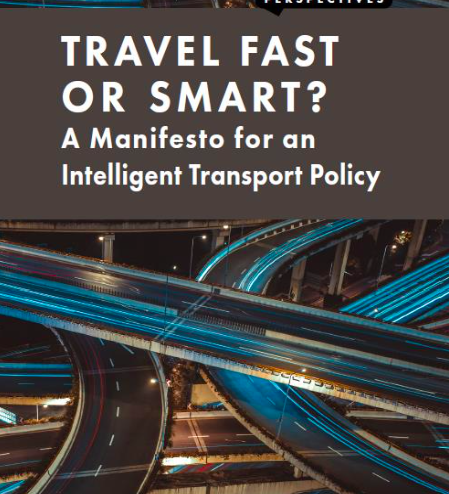
I have a new book published on 1 September, one in a series of short books on policy and economics topics described as ‘essays on big ideas by leading writers’. My contribution is a critique of the inconsistencies of transport policy in recent decades, which I attribute to the shortcomings of conventional transport economic appraisal in identifying the benefits that arise from investment. A column in The Spectator magazine of 26 September described my book as ‘excellent throughout’.


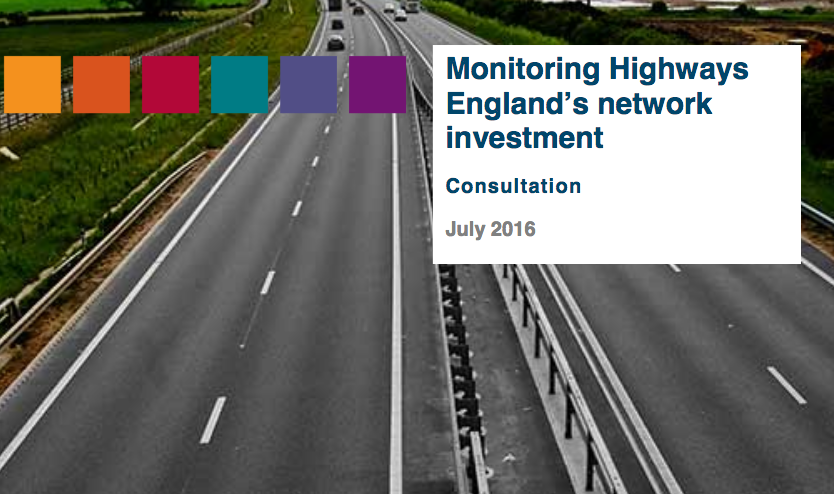
The Office of Rail and Road has responsibility for monitoring Highways England’s delivery of the Government’s Road Investment Strategy. This involves investment in England’s Strategic Road Network of £15bn over five years, with more to follow. The ORR has been consulting on how to carry out this task. My response to this consultation is as follows.

The economic rationale for investment in the road network is to generate benefits for users, including in particular the saving of travel time. It would therefore be appropriate for the benefits to users of Highways England’s investment programme to be evaluated as part of ORR’s monitoring process.

In general, traffic congestion on the Strategic Road Network (SRN) arises in or near populated areas, where local traffic adds to long distance traffic; remote from such areas, the traffic generally flows freely. From the perspective of orthodox transport economics, a congested road is an opportunity to invest by adding capacity. But how do road users experience the benefit?

Highways England has evaluated the outcome of ‘major schemes’ five years after opening. It finds that average time savings are small, 3 minutes at peak periods.[1] The economic case for investment depends on multiplying such small time savings by a large number of vehicles (and by monetary values of time saved). Nevertheless, it is relevant to ask how road users experience such small time savings.

While a few minutes time saving would not be material for long distance users, it could be significant to local users on short trips, in particular by allowing more opportunities and choices when changing job or moving house. Indeed, it seems likely that the main benefit of investment in additional capacity on the SRN would accrue to car commuters.[2]

It would therefore be important to understand the nature and distribution of the benefits of the investment schemes of Highways England, as experienced by different classes and locations of road users.

Transport Focus commissioned an Independent Analytical Review for a Road User Satisfaction Survey in 2015. This recommended the development of a continuous online survey of satisfaction using a representative panel of road users. Repeated surveys of a panel would allow trends in satisfaction to be monitored over time. Transport Focus is currently piloting this approach.[3]

Such a survey technique could in principle be used to track the subjective user experience of improvements to the network as a whole. Moreover, relating user experience to specific investments would allow the benefits of these to be understood, as experienced by different classes of road user.

Another approach, also using a volunteer representative panel, would involve monitoring individual travel patterns, based on mobile phone GPS location. This would provide an objective measure of changed travel patterns as the result of investment, and would allow identification of which users benefit, both as regards location, journey purpose and socio-economic characteristics.

Average travel time has been measured for the past 40 years by means of the National Travel Survey. It is noteworthy that average travel time has remained unchanged at about an hour a day, despite many £billions of investment in the road network. This indicates that there are no time savings to users in the long run. There is a therefore a question about the nature of long run benefits, which are mainly to be seen as changes in land use and land value, as land is made more accessible for development that can contribute to economic growth. Travel time savings are therefore short run and their duration needs to be monitored.

Summary

Given the very large expenditures planned for the SRN, it is important to understand the nature and distribution of the benefits of investment. There is an opportunity for the ORR to improve value for money by taking an analytical approach – tracking the experience of road users as this is improved by investment in the road network. Both subjective and objective change should be monitored, to understand the nature and distribution of the benefits of investment.


[1] http://assets.highways.gov.uk/our-road-network/pope/major-schemes/POPE___meta_2011___main_report___final.pdf

[2] http://peakcar.org/valuing-travel-time-savings-problems-with-the-paradigm/

[3]http://www.transportfocus.org.uk/research-publications/research/strategic-roads-user-survey/#_ftn1


I have a new book published on 1 September, one in a series of short books on policy and economics topics described as ‘essays on big ideas by leading writers’. My contribution is a critique of the inconsistencies of transport policy in recent decades, which I attribute to the shortcomings of conventional transport economic appraisal in identifying the benefits that arise from investment.


The major proposal to stimulate the economies of the cities comprising the Northern Powerhouse is to improve east-west transport connectivity, both rail and road. However, the evidence for the benefits of investment in inter-urban transport is less persuasive than for investment in intra-urban services.

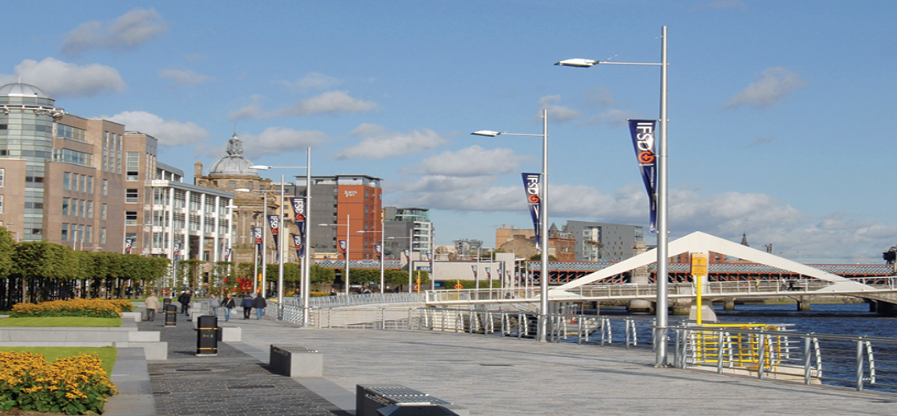
Glasgow and Edinburgh are two cities with good transport links: as little as 48 minutes by rail, with over 200 trains a day in each direction. The economy of Glasgow has changed markedly over the years: whilst manufacturing has declined, there has been significant  growth of service industries, in particular financial and business services. Glasgow is now one of Europe’s sixteen largest financial centres, based on a new International Financial Services District, where operating costs are claimed to be 40% lower than in London.

Of the 20 named businesses located in this District, only one is a company headquarters. The others are back offices or subsidiaries, just two of which report to HQs in Edinburgh, the long established centre of financial services in Scotland. The large majority of these Glasgow operations report to London, other English cities or to overseas head offices, for which north-south and international connectivities are more important than east-west.

Assessment

The good transport connectivity between Glasgow and Edinburgh does not appear to have been an important factor in the development of the financial services sector in Glasgow.


I have a new book published on 1 September, one in a series of short books on policy and economics topics described as ‘essays on big ideas by leading writers’. My contribution is a critique of the inconsistencies of transport policy in recent decades, which I attribute to the shortcomings of conventional transport economic appraisal in identifying the benefits that arise from investment.


The Transport Committee of the London Assembly is holding an inquiry into growing traffic congestion in London. The evidence I submitted is below.

Introduction

Although London’s population has been growing quite rapidly, road traffic in London has not increased over the past two decades, both cars and all motor vehicles, as Department for Transport statistics show (see Figure).

Road traffic growth has been inhibited by the retention of London’s historic street pattern, more road space allocated to buses, cycles and pedestrians, controls on parking in inner boroughs, and congestion charging. The public has accepted constraints on road traffic growth because of investment in public transport, particularly rail, which generally provides speedy and reliable travel for commuting and for work-related journeys in central London. As the population has grown, car use, as a share of all trips, has declined from a peak of 50% in 1990 to 36% currently, projected to decline to perhaps 27% by mid-century with continuation of present policies.

Mitigation of Traffic Congestion

Average travel time is invariant as measured in the National Travel Survey: over the past 40 years, it has remained steady at about an hour a day nationally, 1.1 hours in London. Accordingly, traffic congestion is self-limiting: as traffic speeds fall, journey times rise, and flexible road users change the timing, mode or destination of their trips. Gridlock can generally be avoided through Active Traffic Management measures.

The origin of the recent observed increase in congestion is unclear: it could be a short-term response to particular developments, such as the Cycle Superhighways or the construction boom, with congestion expected to lessen in time as the more flexible road users adjust.

Of the of possible means for mitigating congestion:

  • Investment in rail to accelerate mode shift is likely to have the biggest impact.
  • Flexible road users could be encouraged to avoid peak congestion by providing them with good information on expected journey times via mobile phone apps. This would reduce congestion for those whole are less flexible.
  • A workplace parking levy might be beneficial, particularly by generating funds to support investment in public transport.
  • More bus priority measures, including Bus Rapid Transit, would increase the speed and reliability of buses, thus attracting people from cars.
  • It would be worth investigating the scope for fine-tuning road layouts, on-road parking restrictions, permitted turns and Active Traffic Management, based on suitable traffic modelling methodologies.
  • Car sharing in place of personal ownership results in people making less use of the car, which is helpful.

Other possible means for mitigating congestion seem less attractive:

  • The extension of congestion charging to the Western zone in 2007 and its subsequent withdrawal in 2011 had little impact on congestion. A substantial increase in the charge would pose problems of public acceptability.
  • New road infrastructure, such as the proposed East London River Crossings, would add to traffic without reducing overall congestion. We know from experience that we can’t build our way out of congestion (and understand why).
  • Regrettably, investment in cycling infrastructure is unlikely to get people out of their cars. In Copenhagen, 30% of all trips are by bike, but car use at 33% is only a little less than London: walking and public transport take the hit. However, investment in cycling infrastructure would reduce crowding on public transport. (Relevant to Q4,14)
  • Driverless cars, as being developed by Google for instance, are essentially taxis with robot drivers. More use would be made of such taxis if they were cheaper, as they might be if robots replaced human drivers, which would increase demand. Parking requirements for privately owned cars might reduce in residential districts and in off-street car parks, but not for on-street parking in central areas, so the impact on congestion seems unlikely to be substantial.

Increased vehicle occupancy

One longer term approach to mitigating congestion would be to encourage increased vehicle occupancy. For instance, UberPOOL offers ride sharing for people going in the same direction, sharing the cost. In the long run we might envisage a system of driverless shared-occupancy taxis. This could be facilitated by (a) demand management measures to prioritise shared over single occupancy (as High Occupancy Vehicle lanes on US freeways or the exemption of taxis from congestion charging in London); and (b) traffic management that takes advantage of developing vehicle-to-infrastructure communications to smooth flows and avoid conflicts (analogous to Air Traffic Control). While implementing a system of this kind would face formidable challenges – technological, institutional, commercial, public acceptability – it offers the prospect of a more efficient road network that provides reliable, uncongested, door-to-door travel at the user’s time of choice.

Conclusions

Traffic levels in London as a whole are stable, despite population growth. Congestion is self-limiting, as flexible road users adjust to slower speeds. There is scope for accelerating the shift away from car use, without detracting from London’s success, particularly by further investment in public transport, which could ease traffic congestion. In the long run, driverless shared-occupancy taxis may allow a significance increase in efficiency of the road network.


I have a new book published on 1 September, one in a series of short books on policy and economics topics described as ‘essays on big ideas by leading writers’. My contribution is a critique of the inconsistencies of transport policy in recent decades, which I attribute to the shortcomings of conventional transport economic appraisal in identifying the benefits that arise from investment. Readers of this web-magazine will recognise many of the arguments, now brought together in a single volume at a modest price.

On a recent visit to Sweden, I learned of the Swedish approach to planning a new High Speed rail network linking Stockholm, Gothenburg and Malmo, led by the National Negotiation on Housing and Infrastructure. The approach is to initiate a negotiation on co-financing focused on the benefits and in which municipalities, regions, towns and cities and the business sector can all participate and influence the result. The aim is to get the greatest possible benefit for the funds invested by all parties, both housing and labour market.

The outcome will be agreements that identify who finances the infrastructure in the major cities and who finances the new high-speed railways, where the highspeed railway lines will be mapped out and where homes will be built. Evidently, the more that localities are willing to contribute, the more benefit they can hope to gain from the route of the railway.

Assessment

The Swedish approach seems a lot more attractive than the UK approach to HS2, which involved top-down route planning for a nationally financed railway, with subsequent adjustments to respond to representations from cities, in particular for city-centre stations rather than the original lower cost out-of-town locations. The Swedish approach also focuses on real economic benefits, rather than notional travel time savings whose relationship to reality is obscure.


It is difficult to build housing in many parts of Britain at a rate to meet the growth of demand. This leads to inflated prices, whether to buy or rent, with younger people finding it increasingly tough to acquire ownership of their own homes.

However, the rate of addition to the housing stock from new build is quite small, contributing only about 10% of the annual supply for rent or purchase, with the other 90% from turnover of the existing stock. So it is worth considering whether the use made of the existing stock could be more efficient. Danny Dorling, professor of geography at Oxford, has pointed out that Census data shows a steady increase in the number of rooms per person, currently almost 2.5 (‘rooms’ comprises bedrooms, living rooms and kitchens). This suggests that pressures in the housing market arise from maldistribution of available accommodation, whether arising from inequalities of income, from people holding on to houses larger than they need as an investment, or from geographical location.

One possible approach to achieving a more efficient and equitable use of the existing stock would be through investment in the transport system that would increase accessibility, particularly of housing to the location of employment. The supposition is that turnover of existing stock (‘churn’) would tend to increase the efficiency of use when those purchasing are constrained by income and those selling are downsizing, for instance following change of family circumstances such as death, divorce, or ‘empty nest’. Increased access as the result of transport investment would tend to increase opportunities for purchase by those seeking properties they can afford, and to increase the incentive to sell by those downsizing.

An example of such enhanced access impacting the housing market is London’s Overground railway, old track rejuvenated by investment in stations and rolling stock, and resulting in both a 5-fold increase in passenger numbers and some of the biggest house price increases (per cent) in London, as neighbourhoods with lower cost accommodation have become more accessible. Plans for future rail investment in London will also make more housing accessible to where people work, including Crossrail2, the extension of the Bakerloo Line, and plans for Transport for London to operate suburban rail routes as high frequency metro services.

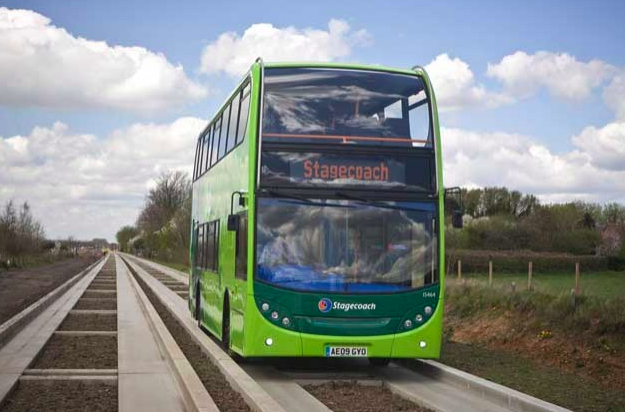
Beyond London, the Cambridge guided busway (pictured above) includes three park-and-ride sites with a total of 2700 parking spaces for those wishing to avoid driving into the city. The busway serves Northstowe, a former airfield where there are proposals for a new town up to 10,000 new homes.

Rail and guided busways (known generally as Bus Rapid Transit) offer fast and reliable travel for work journeys, compared with the car on congested roads. Investments in these transport modes allow towns and cities to grow by making land accessible for housing development, without a corresponding increase in car use that would add to congestion – known in the US as Transit-Oriented Development. In contrast, adding capacity to inter-urban roads adjacent to populated areas would allow more car commuting and hence housing development, but would add to traffic congestion at urban destinations.

Assessment

Given the stresses in the housing market and the difficulties in Britain of increasing the rate of construction of new dwellings, there are attractions in a focus on improved public transport as a means of increasing access to more affordable housing.


I contributed to a recent meeting of the Transport Statistics Users Group to discuss Investment Appraisal.  My presentation: Metz TSUG 13-7-16    The main points I made are set out below.

The Department for Transport (DfT) recently commissioned new research to establish monetary values for the saving of travel time. This has served to highlight the problems of using Stated Preference experiments to estimated values of time saved by asking respondents hypothetical questions about the trade-off of time and money costs. Quite a lot of variation in the value of time is found, according to the experimental set up, depending on what other factors are invoked, for instance journey time variability, road congestion or rail crowding; and also whether, for work trips, the perspective is that of the employer or employee. Moreover, an attempt to establish Revealed Preference values, by ascertaining behaviour for rail trips where there was choice of alternative routes, did not succeed for technical reasons. The upshot was new values for time savings that differed substantially from previously established values using the same approach, for reasons that are not clear.

Altogether, the SP approach seems decidedly problematic in establishing sound values for travel time savings. But there is a bigger problem, in that the National Travel Survey shows that average travel time has hardly changed over the past 40 years that this has been measured, despite huge investment in infrastructure justified by supposed time savings benefits. The explanation for this apparent paradox is that the SP experiments use short term trade-offs whereas the NTS recognises the long term outcomes, whereby people take the benefit of investment by travelling further at higher speeds to gain additional access.

Land use change

This additional distance travelled gives rise to changes in land use, as for instance in London’s Docklands, which have been made accessible by public investment in the rail system, permitting private investment in high value accommodation. The economic case for Crossrail, due to open in 2018, was based largely on time savings (user benefits), divided three ways between business, commuting and leisure travellers. To this was added the economic benefits attributed to ‘wider impacts’ (mainly agglomeration effects) not included in the user benefits. What was not included, however, was the increased real estate values since this would be double counting user benefits. So real observable increases in land and property values are disregarded in the standard approach to appraisal, which prefers notional time savings and notional ‘wider impacts’.

Another rail investment appraisal is that for HS2, which is also  based mainly on user benefits. The problem in this case is the lack of any indication as to where, regionally, the benefits arise, a serious deficiency given that the intention of the new rail route is to boost the economies of the cities of the Midlands and the North.

Who benefits?

For road investment, the problem with the standard approach based on time savings is the failure to consider distribution of benefits across classes of road users. Congestion arises on the Strategic Road Network in or adjacent to populated parts of the country, where it is used by local users, particularly for commuting, as well as by long distance users. My own analysis suggests that it is local users who get the bulk of the benefit from investment to increase the capacity of the SRN, faster travel permitting more choice of jobs and homes, the extra traffic returning congestion to what it was, with long distance users no better off. If this is right, there is a question of the value of national investment in the SRN that fosters local car-based commuting. The failure to distinguish how the benefits of investment affect different classes of road user means that this question is not addressed. (In contrast, the distribution of benefits to different classes of rail users is possible, because we have data from ticket sales that allow this classes to be distinguished.)

In summary, the travel time savings methodology is problematic because:

  • SP values of time are sensitive to context.
  • There is only a very tenuous connection between short run SP values and the value of long run real estate development.
  • There is no indication of how benefits of investment are distributed regionally (for long distance rail) or by classes of users (for roads).
  • Observable changes in land and property values are disregarded, which means there is a disconnect between the economic case for an investment and the business case.

Reliability

A further benefit of transport investment can be improved reliability – improved traffic flow on roads, reduced lateness on public transport. The SP research investigated this and concluded that the ‘Reliability Ratio’ should be reduced from 0.8 to 0.4. (The RR is the value of travel time variability (SD) divided by the value of travel time savings: it enables changes in variability of journey time to be expressed in monetary terms.) This downgrading of the importance of reliability seems at odds with a previous study by DfT that surveyed road users about their preferences. One question asked about priorities if additional money were available: improving traffic flow ranked well above reducing journey times. While not a formal SP investigation, the survey findings suggest that reliability should be the main economic benefit from a user perspective, rather than time savings, which is the reverse of the WebTAG treatment.

Having appropriate monetary values for reliability is important for appraising investments focused on this aspect, for instance variable speed controls for managed motorways and predictive journey time information that mitigates the main detriment of traffic congestion. Such digital technologies are likely to be far more cost-effective that civil engineering technologies in improving the user experience.

WebTAG deficiencies

The DfT’s approach to transport investment appraisal, known as WebTAG (web-based transport analysis guidance):

  • Under-estimates benefits of urban rail investments, because the enhancement of real estate values is disregarded.
  • Over-estimates benefits of inter-urban road investments, which foster local car commuting.
  • Under-estimates benefits of digital technologies.

The Treasury provides central guidance on analytical methods used across government departments. The original Green Book advises on investment appraisal, where the WebTAG approach to cost-benefit analysis is seen as an example of good practice. It is, however, an outlier in the amount of detailed analysis required to be compliant, and hence in the effort required. Other departments are less demanding. For instance, there have been major programmes of school and hospital building in recent years, but there is no theory of how replacing an obsolescent building improves educational or health outcomes, which limits analysis to considerations of cost-effectiveness.

The most recent Treasury guidance is the Aqua Book, which deals with quality assurance in analytical models, and was prompted by DfT’s analytical shortcoming in connection with retendering the West Coast Main Line rail franchise in 2012. One requirement is that analysis should be ‘grounded’ in reality: connections must be made between the analysis and its real consequences. The WebTAG approach fails this test, for the reasons outlined above.

I am not alone in my criticism of the established approach to transport appraisal. The Transport Planning Society conducts an annual survey of its members: ‘Most TPS members consistently say that appraisal methods should be reformed. In the most recent survey, only 3.5% considered current methods did not need reform, with 60% having major issues with them. The top reason for this by some way was the need to appraise changes in land values, land-use or travel behaviour.’

Space not time

Recalling first principles:

  • Transport moves people and good through space (not time).
  • Investment that increases speed or capacity leads to more movement through space (not time).
  • We therefore need an economic framework that recognises spatial characteristics – Spatial Economics.

Spatial economics is a long-established sub-discipline of economics, going back almost two centuries to the seminal work of von Thunen who related the value of agricultural land, as measured by the rents that farmers could afford to pay to landowners, to the nature of the produce grown and the costs of transporting it to the market in the nearest city. This approach was subsequently extended to cities (urban economics) where the cost of housing falls as the costs of travel to employment in the city centre increase. The Spatial Economics Research Centre at the LSE is one source of expertise, although it appears not to have engaged in consideration of the kind of spatial economic analysis that would assist transport investment appraisal by mitigating the deficiences of the time savings approach.



I recently participated in a study visit to Copenhagen, organised by the Young Urbanist Network of the Academy of Urbanism. This proved to be an excellent opportunity to understand the impact of pro-cycling policies in Denmark.

The Bicycle Account records that Copenhagen is very friendly to cyclists, with 45% of all journeys to work or education made by bike, up from 36% ten years ago. For residents of the city, the figures are 63%, up from 52%.

It is interesting to compare Copenhagen with London as regards mode share for all trips: bike C 30%, L 2%; car C 33%, L 37%; walk C 17%, L 24%  ; public transport C 20%, L 37%. So compared with London, promotion of cycling in Copenhagen has reduced public transport use markedly, walking significantly and car use just a little.

The Bicycle Account estimates that there is a net socioeconomic benefit of DKK 1.62 per km (£ 0.18) for a cycle trip during rush hour, in comparison with the journey not having taken place. The main benefits are convenience (time saved) followed by health. For a car, there is a loss of DKK 5.63/km.

The main feature of cycling in the city and beyond is the general provision of dedicated cycle lanes, located between the pavement and the carriageway, separated by kerbs from both. Only on residential roads or narrow historic city centre streets do cyclists have to share space with cars. In addition, there are traffic signals for bikes with give them a head start (typically 6 seconds). Car drivers defer to bikes when they need to cross a cycle lane.

I took the opportunity to try the electric bikes available for rental on the streets, equipped with an iPad-like display for login, payment and satnav route. This behaved like a normal bicycle, with a boost from the power-assist – very pleasant.  These electric bikes seem aimed at tourists since residents all have bicyles and the city is flat, so little need for a power-boost.

The question I had in mind at the start of this trip was: how can we get people out of cars onto bikes? – something that seems difficult in Britain. What I learned is that, with vision and perseverance, and in particular by segregating cyclists from general traffic, it is possible gain a very substantial share of trips for bicycles, but largely by switching from public transport and walking. It is still hard to get people out of their cars, even in such a cycle-friendly city as Copenhagen.

My colleagues at the UCL Transport Institute recently organised a conference on the theme of ‘Radical Transport’. The outline of my presentation is below.

Plans were developed in London in the 1960s for an inner motorway ‘box’ (ie a rectangular orbital road within the North and South Circular Roads). Westway, an elevated arterial road, was built westwards from central London to the planned ‘box’ at White City. A similar northwards route, widening the A1, was started, with a six-lane duel-carriageway constructed up to the edge of Highgate Village. There followed four public inquiries into plans to continue the widening, which were strongly opposed by local people, led, amongst others, by a Haringey councillor, the young Jeremy Corbyn. The upshot was the decision to abandon plans for the motorway box, although the sections in east London, north and south of the Blackwall tunnel, were constructed.

London avoided building obtrusive elevated motor roads in the inner city, essentially retaining the historic street pattern from the age of horse-drawn vehicles. This has limited the growth of car traffic, which indeed has fallen somewhat over the past twenty years, despite rapid growth of population and incomes. The consequence has been a steadily declining share of journeys by car, from 50% of all trips in 1993 to 36% currently, with public transport use growing to compensate.

London has thrived economically, culturally and socially, despite (and because of) not building the motorway box to accommodate growing demand for car travel. Had the standard approach to economic appraisal of proposed transport investments been in use at the time, the economic case for construction (the ‘Do-something’ case, as the economists designate) would have been based on the time savings to car users, compared with the supposed traffic-congested ‘Do-minimum’ case. In fact, the Do-minimum case was adopted, which turned out to be the better policy.

Heathrow runway

I have written previously about the possibility of not building another runway at Heathrow, an issue with which the Government is still struggling following the recommendation of the Airports Commission in their final report of July 2015. The Commission’s economic case estimated benefits of a third runway at Heathrow (the Do-something case) as £69bn NPV gross, and £12bn net, after subtracting construction costs and disbenefits. What is not clear from the published information is the nature of the Do-minimum case, against which these benefits are estimated. It seems likely that a static pattern of air travel has been assumed to hold in future at Heathrow. What appears to have been disregarded is the dynamic response of a very competitive aviation industry to a capacity constraint.

Three-quarters of passenger passing through UK airports are on leisure trips. Even at Heathrow, only 30% of passengers are on work trips. Yet all the arguments for airport expansion are about increasing business travel – more destinations for British exporters, more inward investment, London as a world city for doing business. There is little reason to expand leisure travel: the UK has a negative balance of trade in tourism, which could worsen; and London, a working city, is getting very crowded with visitors.

With no new runway at Heathrow, business travellers would claim priority for existing capacity because they would be wiling to pay premium process for use of the hub airport. This would displace leisure travellers elsewhere, for instance to take advantage of unused capacity at Stansted. An important innovation in air travel in recent years has been the rapid growth of Middle East airlines based at hubs in the Gulf, well suited for serving long-haul destination to the east and south. At present, the three Middle East airlines between them fly daily from six UK airports apart from Heathrow, not yet including Stansted, which seems a natural alternative if Heathrow accommodates more business travellers.

If it were easy to decide where to build another runway in southeast England, if it were easy to mitigate the environmental consequences, and if it were easy to finance construction from private sector resources, then it would be sensible to go ahead. But since none of these are easy, we could live with a runway capacity constraint, and London would continue to thrive on the Do-minimum case.

East London River Crossings

Another situation where Do-minimum may be the best policy is the case of the proposed two new river crossings in East London, costing £1bn each. As I have argued previously, the scale of congestion from induced traffic has been underestimated, and the impact on development probably overstated. Better use of the money is available – the ‘opportunity cost’ – by strengthening radial rail links to employment opportunities in central London, which will allow developers to building housing on land made more accessible.

Assessment

We tend to neglect consideration of the Do-minimum case in transport investment appraisal for a number of reasons:

  • There is a ‘bias to action’ that motivates contractors and consultants to favour construction, since that is how they earn revenues. Likewise, many politicians favour investment that gains them credit. The bias to action is compounded by the well-known phenomenon of ‘optimism bias’, which involves underestimating construction costs and overestimating usage.
  • Spending other people’s money allows these biases to flourish. Spending your own, or your shareholders’, enforces a more rigorous analysis. A mistaken investment in the private sector can be damaging to the business and to the reputations of those responsible, but in the public sector, the ship of state sails onwards, with blame for disappointing investments being diffuse.
  • We neglect the ‘opportunity costs’ of investments: the benefits forgone from better use of the resources.
  • There are of course uncertainties associated with the Do-minimum case, but these are not different in kind or scale with those associated with the Do-something case. It may take more imagination to consider how users of transport systems – individuals and businesses – respond to capacity constraints.

The comparison between Do-something and Do-minimum nowadays increasingly boils down to a question of investment in civil/mechanical engineering versus digital technologies. Most transport investment involves costly and impacting civil engineering – shifting earth, pouring concrete, rolling tarmac – or in expensive kit: trains and planes. In contract, digital technologies can be far more cost-effective, and are out of sight and mind. The Do-minimum option for London’s proposed motorway box has turned out to involve an effective urban traffic management system that proved its worth coping with the big shift of flows during the 2012 Olympics, and improved signalling on the Underground that permits 36 trains per hour, increasing capacity by up to 30% – an example of the ‘digital railway’.


The article below appeared in Local Transport Today 699, 10 June 2016. It was prompted by discussions at a workshop event organised by colleagues at the Transport Institute of University College London, who are carrying out a study for the Department for Transport of social and behavioural impacts of autonomous vehicle.

There is much interest in the possibilities for autonomous vehicles, in particular driverless cars. Focus is mainly on technological feasibility, role of the driver, risks and insurance. What has not yet been sufficiently considered is the implications for traffic. How much difference would autonomous vehicles make?

There are two broad routes to driverless cars. Mainstream auto manufacturers are equipping vehicles with devices that assist the driver. Adaptive Cruise Control automatically adjusts the vehicle speed to keep a safe distance from the vehicle ahead. Lane Keeping systems alert the driver if the car is drifting out of its lane and assist in steering back. Self-Parking systems allow a vehicle to park hands-free. Such devices are contributing to a reduced role for the driver, which ultimately could lead to driverless vehicles. The crucial transition is from high automation to full automation. Because many manufacturers, BMW for instance, market their cars on performance, they are likely to encourage hands-off-the-wheel only in situations where there is little challenge to the keen driver – such as long motorway trips or slow-moving urban traffic. Otherwise, driving is to be enjoyed.

Google’s pods, lacking a steering wheel, exemplify the other route – the great leap forward to full driverless. While these electric vehicles could be privately owned, they seem particularly suitable for shared ownership, given that they are, in effect, taxis with robot drivers. Taxis are popular, and we would make more use of them if they were cheaper, which they might be if robots replaced humans. This could increase demand, adding to traffic congestion in urban areas. But possibly the technology might allow the safe distance between moving vehicles to be reduced, packing more into the available carriageway.

The main impact on traffic of shared driverless cars is likely to be via parking. Privately-owned cars are generally parked for 95% of the time, seemingly an inefficient use of resources. Sharing would allow more time in use and so fewer parked cars. But the main impact on road space would be in the suburbs and car parks, not city centre streets where congestion is most acute and where parking is limited to avoid impeding traffic.

Driverless vehicles would contribute to congestion when they are on the move empty, as do black cabs plying for business. Programming your personal driverless car to cruise round the block empty while you transact business in a shop – in effect ‘parking’ on the move – would need to be regulated, possibly banned, in city centres (although this could lessen the attractions of driverless vehicles). A two-car family might economise with one driverless car, taking the breadwinner to work, then returning for use by the house wife/husband and children, before collecting the worker at the end of the day. But this would double the number of work trips, adding to traffic.

Altogether, it seems likely that the overall impact of driverless cars would be to increase urban traffic. It would be desirable model traffic flows under a variety of driverless scenarios to understand better the implications, since there may be conflicting policy objectives.

The UK Government is keen on driverless cars. The ministerial introduction to the Department for Transport’s 2015 action plan, The Pathway to Driverless Cars, starts: ‘Driverless vehicle technology has the potential to be a real game changer on the UK’s roads, altering the face of motoring in the most fundamental of ways and delivering major benefits for road safety, social inclusion, emissions and congestion.’ The Chancellor of the Exchequer, in his 2016 Budget, made a point of announcing trials of driverless cars on the Strategic Road Network by the end of 2017.

It could turn out, however, that benefits of autonomous vehicles on inter-urban roads could be offset by increased traffic on urban roads. One way of mitigating such traffic would be to increase vehicle occupancy significantly. This may be possible though what might be termed the ‘shared-squared-driverless’ mode, involving both shared ownership and shared use.

So rather than one or two occupants, the aim would be to fill the vehicle at peak times with passengers travelling in the same direction. This would reduce urban traffic congestion through high occupancy requiring fewer vehicles, with one study suggesting that this could remove 9 out of 10 cars in a mid-sized European city. Uber has introduced uberPool, a shared taxi service with lower fares, and uberHOP, which facilitates sharing along commuter routes at peak times. Their success will depend on the ability to match enough passengers going in the same direction, and also on the willingness of people to share.

If priority were given to shared-squared-driverless vehicles through road pricing or similar demand control measures, it might be possible to avoid urban traffic congestion while offering speedy and reliable door-to-door travel. This would be facilitated by some central oversight of such vehicles to minimise conflicts and maximise efficient use of the road network (analogous to air traffic control). The outcome could allow the car to compete with rail in urban areas, in terms of speed and reliability, and could help cities without rail infrastructure better to meet the mobility needs of their citizens. However, the technological, institutional and commercial challenges to the shared-squared-driverless concept are substantial, and practical feasibility is unclear.

Colin Buchanan’s seminal report, Traffic in Towns, was published 50 years ago, decades before the possibility of driverless cars. How much difference would autonomous vehicles make to urban traffic congestion? In the medium term, congestion could worsen, unless action were taken to regulate the movement of vehicles without occupants. In the longer term, the possibility of higher vehicle occupancy offers the prospect of mitigating urban traffic congestion.